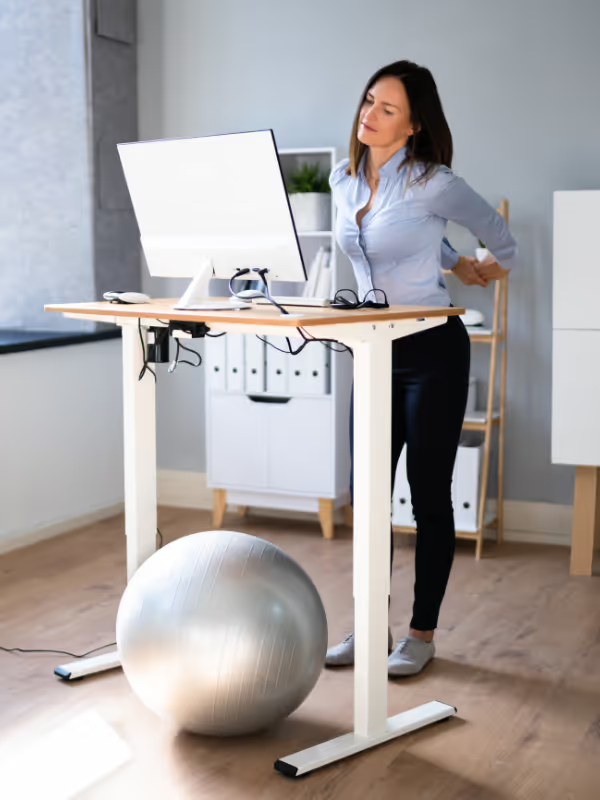
What is ergonomics?
In a corporate environment, this includes how employees sit, where screens are positioned, how desks are arranged, and how often employees move during the day. These everyday factors directly influence the strain the body experiences while working.
When a workspace is poorly set up, the body begins to compensate. Over time, this can lead to neck and shoulder tension, lower back strain, and ongoing fatigue across your team.
A well-designed ergonomic setup supports more natural posture, reduces unnecessary strain, and helps employees stay comfortable and focused throughout the workday.
Why is ergonomics important in corporate wellness?
Work-related discomfort is often linked to prolonged sitting and static postures. Most desk-based employees spend between 6 and 9 hours sitting each day. Up to 80% of adults experience back pain in their lifetime, while 67% of office workers report neck or shoulder pain. Even though sitting may feel low effort, the body remains under continuous load.
Prolonged sitting is often associated with:
- Increased spinal pressure: Prolonged slouched sitting increase pressure on the intervertebral discs, placing added strain on the lower back.
- Reduced focus: Extended sitting can decrease blood flow to the brain, affecting concentration and mental clarity.
- Muscle fatigue and tension: Static positions reduce circulation, leading to fatigue and the development of trigger points, especially in the neck and shoulders.
- Reduced bone support: Bone health depends on regular weight-bearing activity, which is limited during long periods of sitting.
- Increased cardiovascular risk: Each additional hour of sitting increases cardiovascular risk by approximately 2%.
- Mental health impact: Low levels of movement are linked to increased stress, anxiety, and low mood.
Over time, these factors contribute to the stress-posture-pain cycle, in which tension, poor positioning, and reduced movement reinforce one another. Ergonomics plays a key role in breaking this cycle by reducing strain and supporting better movement throughout the workday.
The role of physiotherapy in corporate wellness
Physiotherapy helps businesses identify and address the underlying causes of workplace-related pain. Instead of focusing only on symptoms, we look at posture, movement patterns, muscle function, and daily work habits to understand what is contributing to discomfort across your team.
Our treatment may include:
- Individual assessments: Postural analysis, movement screening, and clinical testing to identify contributing factors.
- Manual therapy: Joint mobilisation and soft tissue techniques to reduce pain and improve mobility.
- Dry needling: Used to release myofascial trigger points and reduce muscle tension.
- Exercise rehabilitation: Targeted strengthening of postural muscles to improve stability and support.
- Ergonomic assessment: Practical workstation adjustments based on individual needs.
- Breathing and stress management: Techniques to reduce tension and address the link between stress and physical symptoms.
- Education: Simple, practical strategies to improve posture, increase movement, and prevent recurrence.
Early physiotherapy intervention helps prevent short-term discomfort from developing into chronic pain, while supporting better function and consistency at work.